
Evaluating Patellar Dislocation via the Femoral Anteversion Angle

Quick Summary

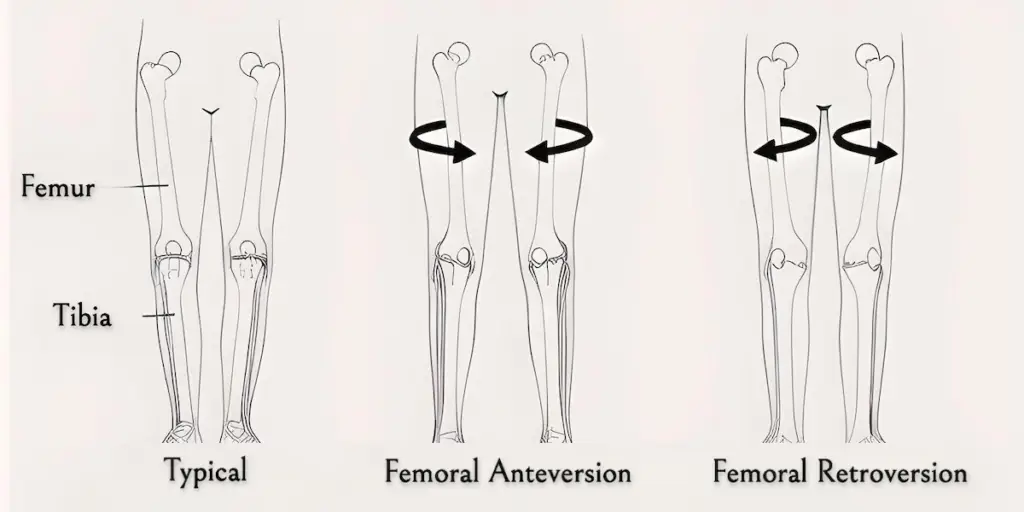
Femoral anteversion — the inward rotation of the thigh bone — is an underrecognized contributor to patellar instability. Increased femoral anteversion alters how the patella sits in the trochlear groove and can drive recurrent dislocations even when other measurements look acceptable. CT-based measurement of the anteversion angle helps identify patients who may need rotational correction, in addition to MPFL reconstruction, for durable stability.

Evaluating Patellar Dislocation via the Femoral Anteversion Angle

In this study in the journal Knee Surg Sports Traumatol Arthrosc. (KSSTA), Chen, et al. evaluated CT scans of patients with and without patellar instability. Not surprisingly, the patients with unstable knee caps had worse alignment as measured by tibial tubercle-trochlear groove (TT-TG), (20.1 versus 15.6). Perhaps more interesting, they found that patients with patellar instability had significantly more femoral anteversion angle (FAA) (21.6 versus 10.6).

Studies like this may ultimately help us determine which patients need surgery and which patients can get away with physical therapy after a patellar dislocation. Evaluation of the hip is very important in assessing a patient with patellar instability and can easily be overlooked.

Read more in this KSSTA journal study.

Frequently Asked Questions

How is femoral anteversion measured?

The rotation of the thigh bone (femoral anteversion) is most accurately measured on a CT scan, comparing the angle of the hip portion of the thigh bone to the back of the knee portion. Normal values are roughly 10 to 20 degrees; values above 30 degrees are considered increased and can contribute to kneecap tracking problems. Standard X-rays and a clinical exam alone are not reliable for this measurement.

Does increased femoral anteversion always require surgery?

No. Many patients with mildly increased rotation of the thigh bone do well with MPFL reconstruction and physical therapy. A derotational osteotomy (a procedure that rotates the thigh bone into a better position) is reserved for patients with severe rotation (often more than 30 degrees) and ongoing instability even after MPFL reconstruction, especially when other anatomical factors are also present. The decision is individualized using detailed imaging.

Can adults change their femoral anteversion with exercise?

No — the rotation of the thigh bone is a bony alignment that doesn't change with strengthening or stretching. Exercise can improve the muscle control around a rotated hip and reduce symptoms, but it cannot rotate the bone itself. When the rotation is the main driver of kneecap instability, a derotational osteotomy is the only way to correct the bone.

Related Reading

Considering treatment for a knee or shoulder concern?

Dr. Sabrina Strickland sees patients at Hospital for Special Surgery in New York City. If you would like a personalized evaluation of your symptoms and options, request a consultation below.

Book an appointment Contact the office
Medical Disclaimer. This content is for informational purposes only and does not constitute medical advice, diagnosis, or treatment. Always consult with a qualified physician regarding any questions about your orthopedic health. Individual results may vary based on diagnosis, anatomy, and overall health.
Doctor reviewPENDING