
Surgical Treatment of Iatrogenic Patella Baja

Quick Summary

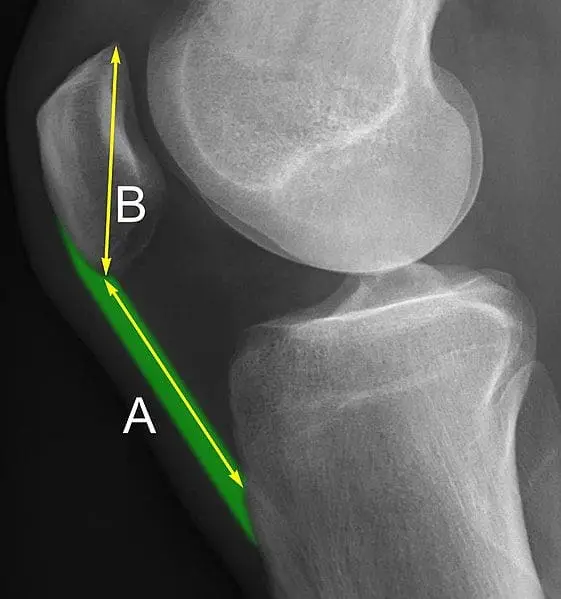
Iatrogenic patella baja is an abnormally low-riding kneecap that develops as a complication of knee surgery — most often ACL reconstruction with bone-patellar tendon-bone autograft, high tibial or tibial tubercle osteotomy, and total knee replacement. The pathology involves quadriceps dysfunction, immobilization, and infrapatellar scarring. Symptomatic patients can be treated with tibial tubercle proximalization, patellar tendon lengthening, or patellar tendon reconstruction, often using allograft or autograft tissue.

Surgical Treatment of Iatrogenic Patella Baja

Patella baja is characterized by a loss of patellar height and can develop as either an acute or chronic complication following a knee injury or surgical procedure. The purpose of this review is to describe the diagnosis and management of patella baja and highlight the senior author’s surgical technique.

Recent Findings

The pathogenesis of patella baja involves a complex interaction between quadriceps dysfunction, immobilization, and inflammation leading to infrapatellar scarring and adhesions. It is associated with fractures about the knee and can result as a complication of surgical procedures such as anterior cruciate ligament (ACL) reconstruction, particularly bone-patellar tedon-bone autografts, high tibial osteotomies (HTOs), tibial tubercle osteotomies (TTOs), and total knee arthroplasties (TKAs). Patients with patella baja can have limited knee range of motion, anterior knee pain, significant weakness with active knee extension, and an extensor lag. Surgical intervention is indicated in cases of symptomatic patella baja. Treatment strategies include tibial tubercle proximalization, patellar tendon lengthening, and patellar tendon reconstruction. Allografts and autografts can be utilized to augment tendon lengthening or reconstructive procedures. Various small case series have reported favorable outcomes for these procedures.

Read more in Current Reviews in Musculoskeletal Medicine.

Frequently Asked Questions

What causes iatrogenic patella baja after knee surgery?

Patella baja caused by a prior surgery develops when scarring and adhesions just below the kneecap pull it downward. It happens most often after ACL reconstruction with a bone-patellar tendon-bone graft, high tibial osteotomy, tibial tubercle osteotomy, or total knee replacement. Quad weakness, long periods in a brace, and inflammation after surgery all contribute. The lower kneecap position affects the system that straightens the knee, and imaging confirms the diagnosis using a specific height ratio.

What are the symptoms of patella baja?

Patients with patella baja typically have limited knee range of motion, front-of-knee pain, weakness with active knee straightening, and an extensor lag (where the leg can't fully straighten under power). Symptoms often appear weeks to months after the original injury or surgery. Some patients also feel that the kneecap sits too low and may have grinding sensations when bending the knee. Imaging confirms the diagnosis.

Which surgical options treat symptomatic patella baja?

Surgical options include moving the kneecap tendon attachment higher on the shinbone, lengthening the kneecap tendon, and reconstructing the kneecap tendon. Donor or your own tissue may be used to augment the lengthening or reconstruction. The choice depends on the cause, the severity of the kneecap-height loss, the condition of the tendon system that straightens the knee, and whether prior hardware needs to be addressed. Surgery is reserved for patients with symptoms — limited motion, front-of-knee pain, or weakness on straightening — not for incidental findings on imaging alone.

Related Reading

Considering treatment for a knee or shoulder concern?

Dr. Sabrina Strickland sees patients at Hospital for Special Surgery in New York City. If you would like a personalized evaluation of your symptoms and options, request a consultation below.

Book an appointment Contact the office
Medical Disclaimer. This content is for informational purposes only and does not constitute medical advice, diagnosis, or treatment. Always consult with a qualified physician regarding any questions about your orthopedic health. Individual results may vary based on diagnosis, anatomy, and overall health.
Doctor reviewPENDING