
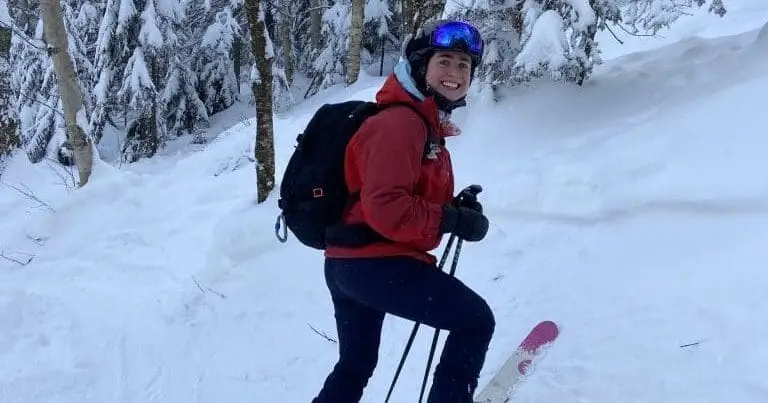
When a skier tears the ACL, there is almost always a meniscus tear with it — and Caroline Silver’s case is a textbook example of why I evaluate both structures together before planning surgery. My favorite stories are from my patients, so today I’m sharing one from Caroline, who had both an ACL tear and a meniscus tear while skiing. Once I fixed her knee, Caroline was running three months later. Not only was she able to become a ski patroller after finishing college, her operative knee usually hurts less than the other one after a long day of moguls and woods!
Read her Back in the Game story about her ACL injury on the Hospital for Special Surgery website.
Why skiing tears the ACL and the meniscus together
The classic ski mechanism is a fall in which the binding fails to release while the tibia is forced forward and rotated against a fixed femur. That single moment loads the ACL and the medial meniscus at the same time — which is why combined injuries are one of the most common patterns I see in ski-related knee trauma at Hospital for Special Surgery. In Caroline’s case, the imaging showed exactly what the exam suggested: a complete ACL tear plus a meniscus tear that was a candidate for repair rather than removal. Recognizing the dual injury before going to the operating room matters, because it changes the surgical plan, the rehab timeline, and the long-term cartilage outlook. Female skiers are at higher risk for this pattern than male skiers, which is also why I review the contralateral knee carefully on every female patient with one ACL injury.
Why I repair the meniscus during ACL reconstruction whenever I can
When an ACL tear is paired with a repairable meniscus tear, doing both in the same operation is, in my experience, the right call. Repair preserves the meniscus’s shock-absorbing function — which is the single biggest factor in protecting articular cartilage and avoiding early osteoarthritis later in life. There is also a healing-biology advantage: the bone tunnels drilled for the ACL graft release growth factors that support meniscal healing, so meniscus repair done at the same time as ACL reconstruction heals at a higher rate than meniscus repair done in isolation. Caroline’s tear pattern allowed for repair, and that decision is part of why her operative knee feels better today than the uninjured one — the meniscus is still doing its job.
Risks and a realistic recovery timeline
I want to be honest about what combined ACL and meniscus surgery involves, because patient expectations are often shaped by social media highlight reels rather than clinical data. Risks of ACL reconstruction include graft re-tear, stiffness, infection, and persistent anterior knee pain — and adding a meniscus repair lengthens the protected weight-bearing and range-of-motion phase of rehab. Most patients are running by three months and cleared for cutting and pivoting sports between 6 and 9 months, depending on graft choice, meniscus repair status, and rehab progression. Caroline’s timeline was on the faster end, and she earned it through disciplined rehab — not because her case was unusually easy. Returning to skiing earlier than your surgeon clears you for puts the graft and the repaired meniscus at real risk of re-injury, and I always counsel patients on this directly. If you have torn your ACL skiing and want to discuss whether your meniscus is repairable, my office at HSS is happy to review your imaging.