
ACL Injury and Recovery in Professional Snowboarders

Quick Summary

Casual snowboarding has a much lower ACL injury rate than skiing — about 1.7% versus 17% in published comparisons. Competitive snowboardcross is the exception: in one survey of 66 elite snowboardcross athletes, 48.5% had torn an ACL at least once, and 91.3% of tears were in the front leg. Encouragingly, every responding athlete returned to sport after ACL reconstruction. Aggressive cross courses, not snowboarding itself, drive the risk.

Trends in Anterior Cruciate Ligament Injury and Recovery in Professional Snowboarders

My experience taking care of well over 1,000 ACL injuries indicates that snowboarding is pretty safe for you, at least as far as ACL tears go. This paper surveyed professional snowboard cross athletes and their data was very interesting. First of all, I was right, skiers are far more likely to tear their ACL. One study quoted 17% ACL injury in skiers versus 1.7% in snowboarders.

However, snowboard cross is far more dangerous. Here is a summary of this study:
[66 competitive snowboardcross athletes responded to the email surveys, 48.5% of respondents had torn their ACL at least once in their career. (female respondents, 55.6% suffered at least one ACL tear,43.6% of male respondents) 31.2% suffered more than one ACL tear during their career. Of those who tore their ACL, 91.3% (p <0.001) tore their front leg. 100.0% of the respondent athletes returned to sport post-ACL reconstruction]. 

Read more about this study in Cureus: Trends in Anterior Cruciate Ligament Injury and Recovery in Professional Snowboarders: The Extreme Sport of Snowboardcross

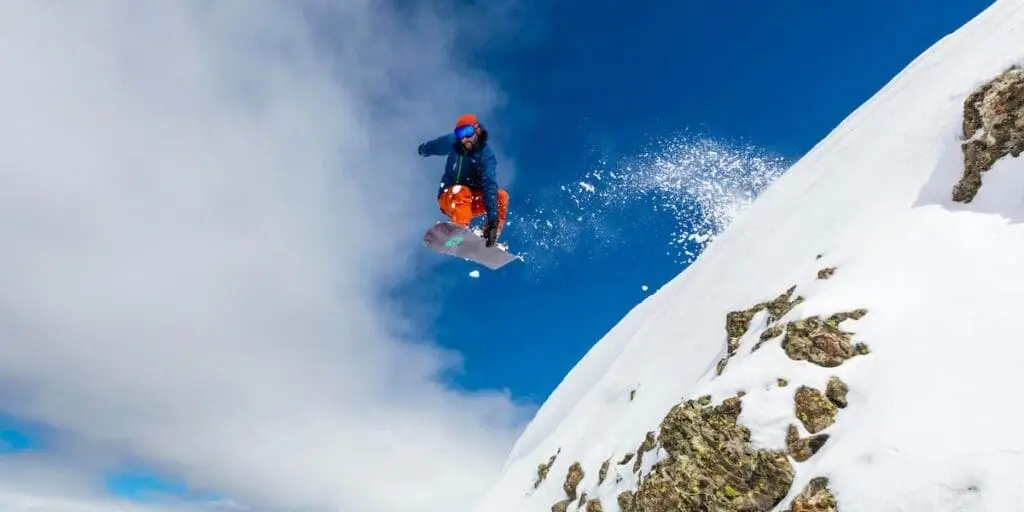
Photo by Go Montgenevre on Unsplash

Frequently Asked Questions

Is snowboarding safer for the ACL than skiing?

For recreational riders, yes. Published data cited in this post shows ACL tear rates of about 17% in skiers compared to 1.7% in snowboarders, which matches what I see in clinic. With both feet fixed to one board, snowboarders don't experience the twisting force pattern that tears most skiing ACLs. The picture is very different for elite snowboard-cross racers — that group has a very high lifetime rate of ACL tears.

Why do snowboard cross athletes have such high ACL tear rates?

The snowboard-cross study summarized in this post found that 48.5% of competitive athletes had torn their ACL at least once, and 31.2% had torn it more than once. Of those tears, 91.3% were in the front leg. Snowboard-cross involves fast contact, jumps, and landings on uneven terrain — the front leg absorbs most of the twisting and impact load on each landing, which puts that ACL under far more strain than the back leg.

Can snowboarders return to their sport after ACL reconstruction?

In the snowboard-cross study cited here, every athlete returned to their sport after ACL reconstruction. That matches what I see in motivated patients — with a good reconstruction, consistent physical therapy, and patience through the 9 to 12 months it takes to be cleared, most snowboarders get back on the mountain. The graft used to rebuild the ACL, the condition of the meniscus, and how consistently you do physical therapy matter more than the sport itself.

Should the front leg dominance in snowboarding ACL tears change how the surgery is planned?

Yes — it changes how I think about both the graft choice and the rehab. When the injured leg is the dominant front leg, I want a graft that can handle the twisting and impact of landing jumps — usually a quadriceps tendon or a bone-patellar tendon-bone graft rather than a hamstring graft in higher-demand athletes. The rehab also has to retrain front-leg control, balance on the edge of the board, and landing technique — not just straight-ahead strength.

Related Reading

Considering treatment for a knee or shoulder concern?

Dr. Sabrina Strickland sees patients at Hospital for Special Surgery in New York City. If you would like a personalized evaluation of your symptoms and options, request a consultation below.

Book an appointment Contact the office
Medical Disclaimer. This content is for informational purposes only and does not constitute medical advice, diagnosis, or treatment. Always consult with a qualified physician regarding any questions about your orthopedic health. Individual results may vary based on diagnosis, anatomy, and overall health.
Doctor reviewPENDING