
When I discuss cartilage repair surgery with patients, I typically go through a multitude of different options, such as cell-based repair such as MACI (one’s own cartilage grown onto a scaffold) versus donor cartilage (osteochondral allograft) versus denovo (donor cartilage fragments). For a fuller overview of the procedures themselves, see my page on cartilage transplantation, OATS, and osteochondral allograft.
The risks and benefits of each are more or less the same in that it doesn’t always work.
Sometimes the cartilage cells don’t grow and fill the defect with extracellular matrix and sometimes the donor cartilage does not survive or heal. We are constantly looking to optimize this surgery by looking at outcomes based on anatomical factors and patient characteristics — work I’ve continued in companion studies on bone-marrow edema as a predictor of allograft failure and long-term MACI follow-up.
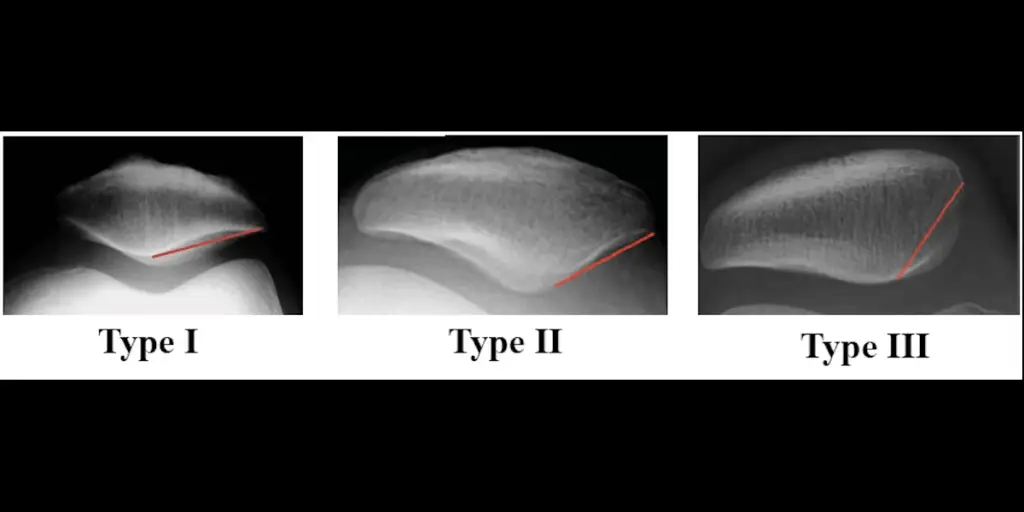
In this study on Wiberg patellar type, I showed that the shape of the kneecap (patella) does not influence outcomes of cartilage transplantation with cell based therapy. At least this is one factor that we can ignore. For patients curious about the underlying repair technique, my procedure page on MACI cartilage repair walks through how the surgery is performed.
Read the full article in Sage Journals:Impact of Wiberg Patellar Type on Outcomes and Survival Following Cell-Based Cartilage Repair for Patellar Chondral Lesions at Midterm Follow-up
Case courtesy of Samir Benoudina, Radiopaedia.org. From the case rID: 40376