
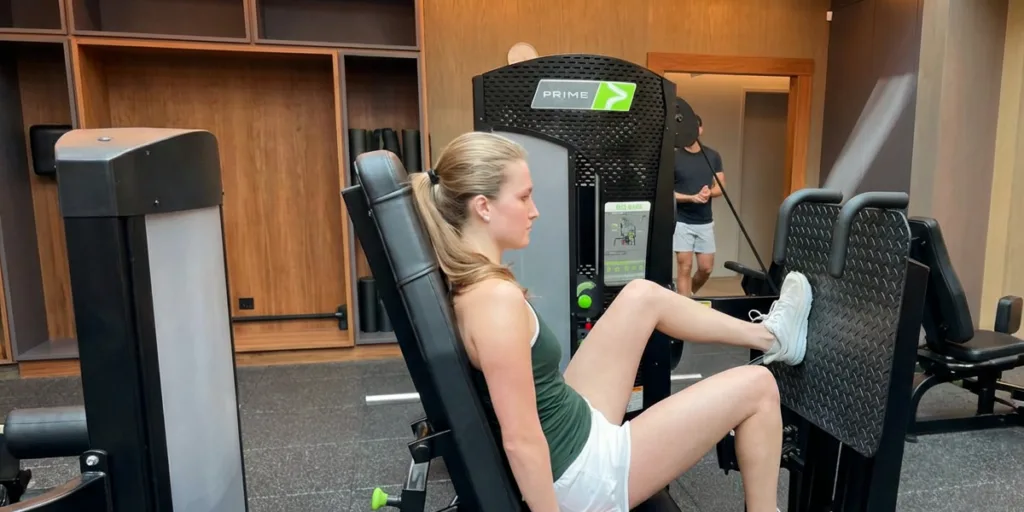
Patients ask all the time what they should actually be doing at the gym to support their knees and build strength safely. The single-leg leg press is one of my favorites because it helps you target each leg individually and uncover any side-to-side strength differences that could affect your joints.
When you use the leg press, you can work one leg at a time or both legs together. If you choose to press with both legs, only do that when you are absolutely sure your leg strength is the same on each side so you are not unknowingly letting the stronger leg take over.
A common question is, “How many reps should I do?” There is no magic number. In the video, you can see the patient continuing until exhaustion, which is a safe and effective way to use this machine when you have good form.
Transcript
As a general guide, I usually like to see people in the 20–30 repetition range for the leg press. That higher rep range helps build muscular endurance and control around the knee, which is critical if you are recovering from an injury or trying to prevent one.
For sets, two to three sets are usually adequate for most people. If you reach true fatigue by the end of your last set—where you could not perform many more good-quality reps—you are likely working in the right zone.
When you watch the embedded video, pay attention to controlled movement, full but comfortable range of motion, and avoiding any sudden, jerky pushing. If you have pain during the exercise, especially sharp pain, reduce the weight, shorten your range of motion, or pause and talk with your physical therapist or orthopedic specialist.
Check out my other patient exercise videos.