
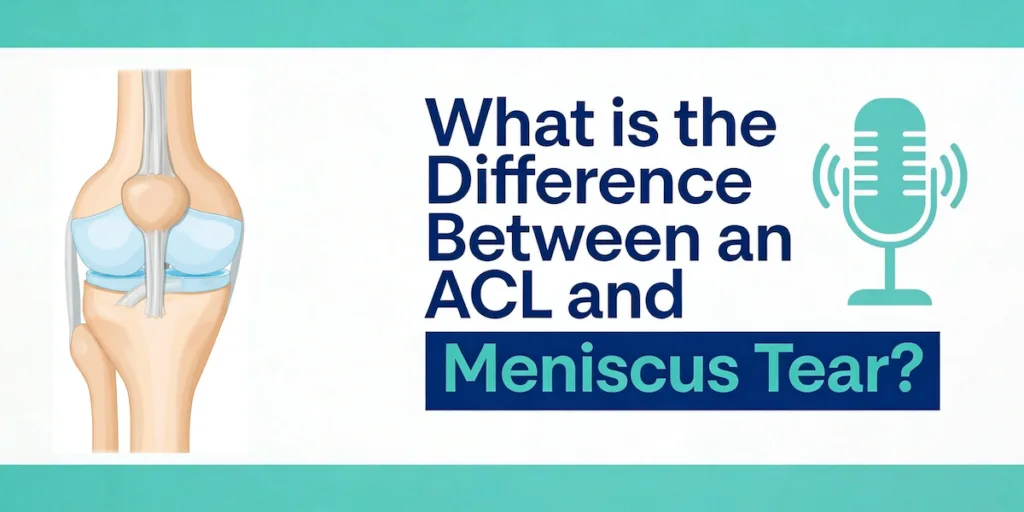
Interview: The Difference Between ACL and Meniscus Tears

Quick Summary

ACL and meniscus tears are the two most common surgical knee injuries and often occur together, but they cause different symptoms and need different treatment. ACL tears typically follow a non-contact pivot with a 'pop' and rapid swelling, producing instability. Meniscus tears more often cause mechanical symptoms — catching, locking, line-of-joint pain — and gradual swelling. MRI distinguishes the two and identifies combined injuries that change the surgical plan.

Difference Between ACL and Meniscus Tears

I recently had the pleasure of joining Hilary Topper on her podcast, Hilary Topper on Air, to discuss two of the most common knee injuries I treat: ACL and meniscus tears. Whether you are training for a marathon or simply want to enjoy a walk around the city, understanding these injuries is the first step toward a successful recovery.

In this episode, we dive into the anatomy of the knee, how to choose between surgical and non-surgical treatments, and the mental dedication needed to get back to your active lifestyle. I also share specific prevention tips and patient exercises designed to help you strengthen your joints and reduce the risk of future injury.

Check out the full episode here: What is the Difference Between an ACL and Meniscus Tear?

What We Covered:

  • The Recovery Journey: How to stay motivated and patient during the rehabilitation process.
  • Understanding the Injury: Breaking down the differences between ACL and meniscus tears.
  • Treatment Pathways: From advanced imaging to the latest in surgical and non-surgical recovery.
  • Building Strength: The importance of proper training and patient exercises for injury prevention.


Frequently Asked Questions

Can you have both an ACL tear and a meniscus tear?

Yes — combined ACL and meniscus tears are common, especially in pivoting-sport injuries. The lateral meniscus is most often torn at the time of the ACL injury, while medial meniscus tears can occur acutely or develop later from instability. I always evaluate the meniscus carefully on MRI and at surgery and prioritize meniscal repair when the tear pattern allows.

Which injury causes more knee swelling — ACL or meniscus?

Acute ACL tears typically produce rapid, large swelling within hours from bleeding into the joint. Meniscus tears more often cause gradual swelling over the next 1–2 days and may have less dramatic effusion overall. The pattern and timing of swelling, along with the mechanism of injury, often suggest the diagnosis before MRI confirms it.

Can a meniscus tear heal but an ACL tear cannot?

Some peripheral meniscus tears in well-vascularized tissue can heal — the meniscus has limited blood supply but more than the ACL. The ACL itself rarely heals reliably without surgery, except for select acute proximal tears that may be amenable to BEAR repair. This biological difference is part of why combined injuries usually need surgical attention to the ACL.

Related Reading

Considering treatment for a knee or shoulder concern?

Dr. Sabrina Strickland sees patients at Hospital for Special Surgery in New York City. If you would like a personalized evaluation of your symptoms and options, request a consultation below.

Book an appointment Contact the office
Medical Disclaimer. This content is for informational purposes only and does not constitute medical advice, diagnosis, or treatment. Always consult with a qualified physician regarding any questions about your orthopedic health. Individual results may vary based on diagnosis, anatomy, and overall health.
Doctor reviewPENDING