
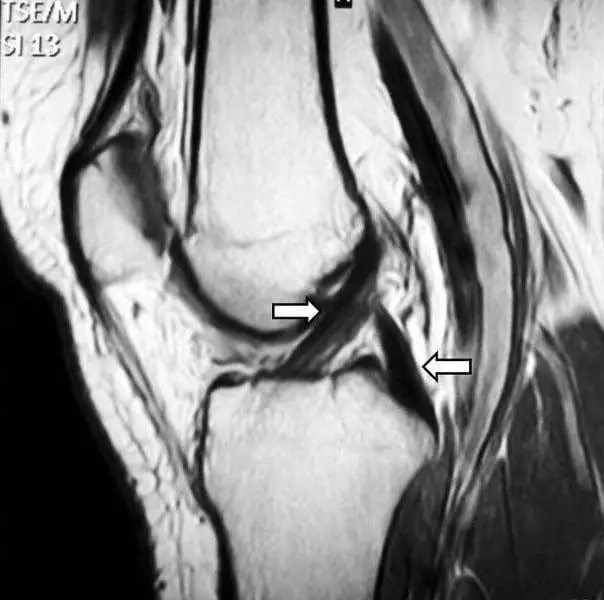
Anterior Knee Pain Following Hamstring ACL Reconstruction

Quick Summary

Anterior knee pain after ACL reconstruction is most often associated with bone-patellar tendon-bone grafts, but it occurs after hamstring reconstruction as well — sometimes from underlying patellofemoral mechanics, residual quadriceps weakness, or kneeling sensitivity at hardware sites. Identifying the specific cause matters more than the graft choice alone. Targeted rehabilitation, occasionally hardware removal, and addressing tracking issues resolve most cases without further surgery.

Anterior knee pain following ACL reconstruction

Anterior knee pain following hamstring ACL reconstruction is a very timely topic. We have been debating graft choice for ACL reconstruction for decades.

First, we repaired the ACL, then we used patellar tendon, then some of us transitioned to hamstring.

Nowadays, the debate continues with the addition of allograft or donor tendons and quad tendon. The advantages of one graft over another have been hard to prove, but the disadvantages are a bit more clear.

When you take a tendon from one part of the knee and use it to reconstruct the ACL, then you are weakening something. That is: if you take the central third of the patellar tendon, then you are weakening the patella (as you take a piece of bone).

The hamstring graft has been thought to have a lower incidence of anterior knee pain than the patellar graft and this study explains why. In those patients who suffered anterior knee pain after hamstring ACL reconstruction at 4 months,  they were found to have lower quad and hamstring strength than those patients who had normal strength.

This is yet another reason why good physical therapy and adherence to a recommended home exercise program is so important. The good news is that by 7 months the patient’s strength normalized and the pain went away.

Read the article “Anterior knee pain following ACL reconstruction” in Physician’s Weekly to learn more. 

Image credit: Marios G Lykissas, George I Mataliotakis, Nikolaos Paschos, Christos Panovrakos, Alexandros E Beris and Christos D Papageorgiou, CC BY-SA 2.0, via Wikimedia Commons


Frequently Asked Questions

Is anterior knee pain more common after hamstring or patellar tendon ACL grafts?

Bone-patellar tendon-bone reconstruction historically has higher rates of anterior knee pain and kneeling discomfort than hamstring grafts. However, hamstring reconstruction is not pain-free — anterior pain can still occur from quadriceps weakness, patellofemoral tracking, or graft fixation hardware. The difference between grafts is real but smaller than commonly assumed, and rehabilitation drives most outcomes.

Can anterior knee pain after ACL surgery be cured with physical therapy?

Yes, in most cases. Targeted rehabilitation focused on quadriceps strength, hip control, patellofemoral mechanics, and gait usually resolves anterior knee pain after ACL reconstruction. Persistent pain despite a thorough rehab program may warrant evaluation for hardware sensitivity, patellofemoral cartilage damage, or other mechanical sources, and occasionally additional intervention.

Should I have hardware removed if my knee hurts after ACL surgery?

Hardware removal is reserved for clear hardware-related symptoms — kneeling pain over a screw, prominent fixation that produces local tenderness, or local irritation confirmed on exam and imaging. Removal is not a routine answer for general anterior knee pain. I evaluate the source carefully before recommending another surgery, since most pain has non-hardware causes.

Related Reading

Considering treatment for a knee or shoulder concern?

Dr. Sabrina Strickland sees patients at Hospital for Special Surgery in New York City. If you would like a personalized evaluation of your symptoms and options, request a consultation below.

Book an appointment Contact the office
Medical Disclaimer. This content is for informational purposes only and does not constitute medical advice, diagnosis, or treatment. Always consult with a qualified physician regarding any questions about your orthopedic health. Individual results may vary based on diagnosis, anatomy, and overall health.
Doctor reviewPENDING